Founder POV
The software independent operators actually deserve

The first time I walked into the back office of an independent c-store, I understood the problem in about four minutes.
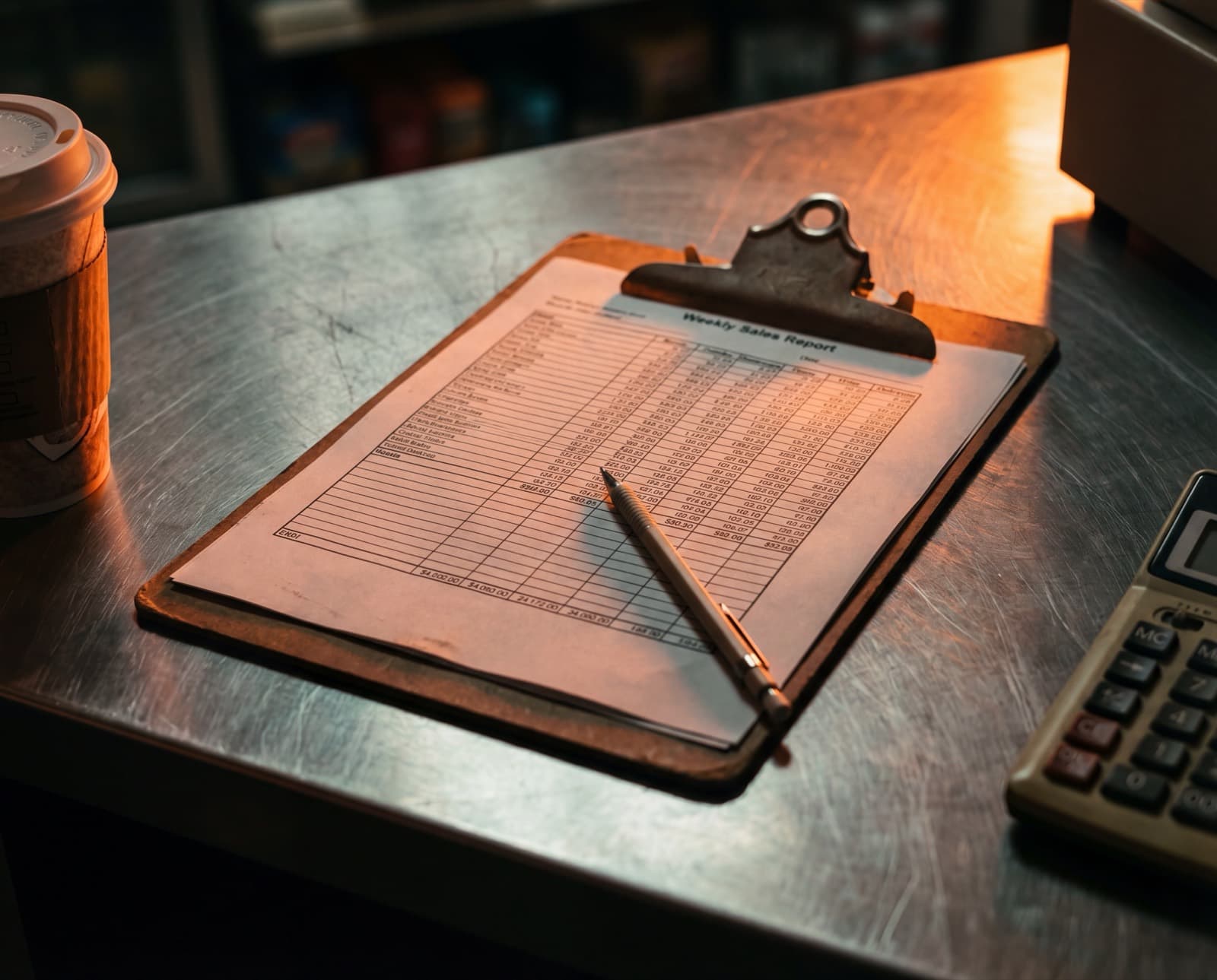
There was a laptop open to a spreadsheet. There was a paper ledger next to the laptop. There were sticky notes on the monitor. There was a three-ring binder on the shelf labeled "SHIFTS" in Sharpie. There was a printer that didn't work. There was a second printer, newer, that did. There was a phone charging on a stack of invoices. The owner knew where everything was. He had to — nothing in that room talked to anything else in that room.
This is not a story about disorganization. The owner I'm describing runs a profitable, long-tenured business. He knows his margins in his sleep. He's been operating for twenty-two years. The back office works because he works — he is the integration layer. He is the API. He is the ETL job. Every night he sits down and moves numbers from one surface to another with a pencil, and the business runs.
The gap isn't scale. It's software.
When I started looking at independent c-stores, I expected to find that the big chains were winning because of scale — better buying power, better brand, better real estate. All of that is true, and none of it is the real story.
The real story is that the chains have software that doesn't exist at the independent level. A mid-sized chain has a labor management system, an inventory system, a fuel pricing system, a back-office accounting system, a lottery reconciliation system, a food-service system, and a data warehouse that ties them all together. Some of it is janky. Some of it is ancient. But it exists, and it talks to itself, and the general manager of a chain store doesn't have to hand-type yesterday's fuel volume into a spreadsheet at 10pm.
The independent operator does. And not because he's behind — because the tools being sold to him are either (a) enterprise software priced for a chain and configured for nothing, or (b) consumer-grade apps that can't handle a real store. There is almost nothing in the middle built for the person who owns two stores and actually opens one of them in the morning.
What we're building
Incline is the software the independent operator should have had ten years ago. Not a lighter version of chain software. Not a heavier version of a consumer app. A product built from the ground up for the person who knows every SKU in aisle three, who can tell you exactly how much the lottery machine made last Saturday, and who shouldn't have to do the math by hand to know whether this week was a good week.
We start from the workflows operators actually run — opening checklists, shift reports, invoice reconciliation, price changes, inventory variance, fuel margin — and we build each one in the place it's actually run: on a phone, on a tablet on the counter, on the laptop in the back office. And we connect them, so the number you typed into your morning count shows up in the margin dashboard by lunch.
Why now
Two things changed. First, the gap between chain and independent got too wide to ignore — margin pressure is real, labor is expensive, and the independents who don't get better tools will lose their businesses. Second, the tools to build good software got so much better that a small team can now ship something that would have required a company of a hundred a decade ago.
We're not the first people to notice any of this. We might be the first people to actually build for it instead of around it.
If you operate an independent store and any of this sounds familiar, we'd like to talk to you. Not a demo. Not a pitch. A conversation. Send me a note.
— Dhruv